urban over-brain
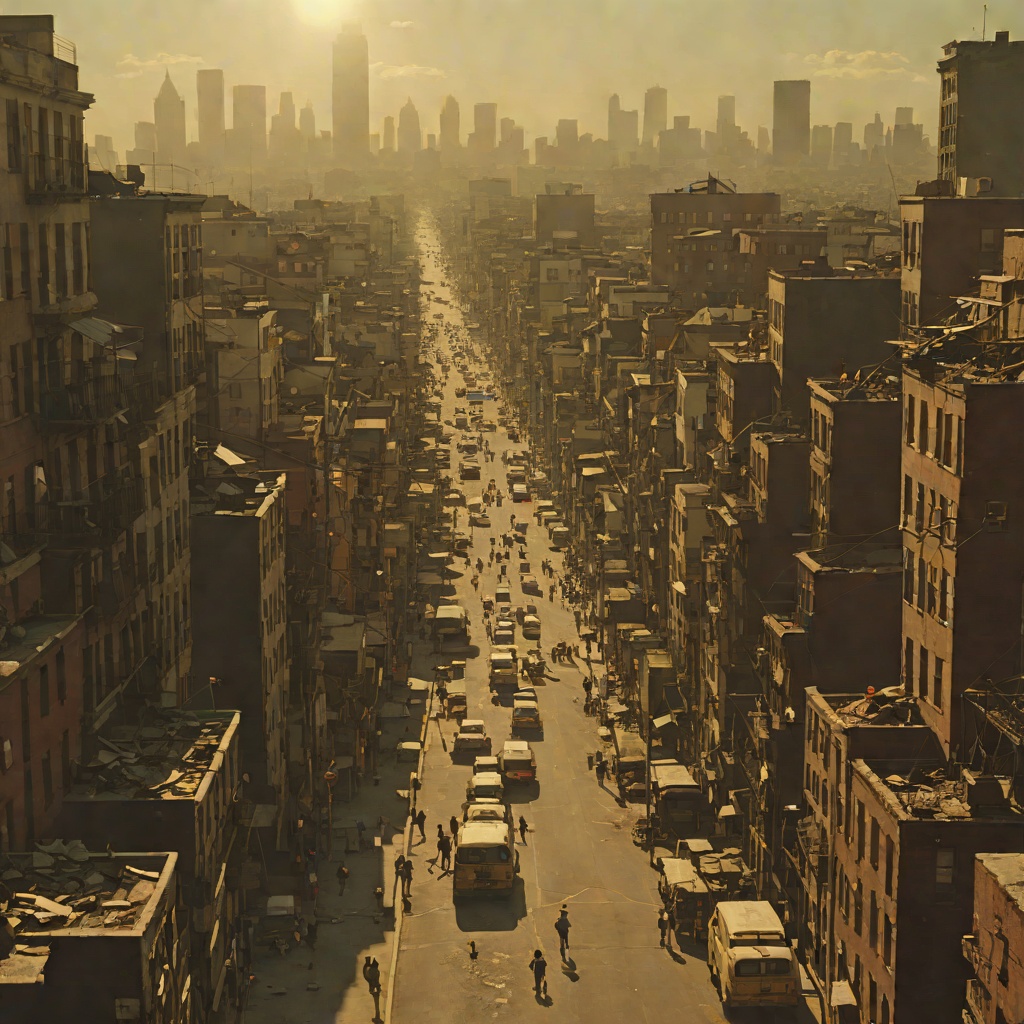
City of GodThe urban over-brain is the novel's most ambitious speculative figure for collective life in New York City: the idea that the city's millions of inhabitants, each privately absorbed in their own errands and desires, together comprise the pulsing, communicating cells of a single invisible organ of thought. The concept emerges from a meditation on a Sunday afternoon in Central Park, where the narrator watches the random, unpredictable movement of great numbers of human beings and proposes that, seen through a wider lens, nothing errant or inconstant appears in their prescribed circulation of activities. Just as a purse snatcher or gun wielder is isolated, surrounded, ejected, and carried off as waste, so the park's masses maintain their integrity as one multicellular culture of thought, always present even when individuals flow through the streets at night or ride beneath them as synaptic impulses in the metropolitan brain.
The Ant Colony as the Model
The urban over-brain is built on an explicit analogy to the ant colony, which the narrator observes with children in a patch of dirt under a tree in Central Park. The ants, each not an eighth of an inch long, go about building an underground city, waving their antennae as if they had never seen one another before, though chemical messages are being synapsed back and forth. The narrator notes that ants lack brains but make do with genetically programmed nervous sympathies, each ant comprising one cell of a group brain that is unlocatable, somewhere above and around them, an invisible organ of thought beyond the capacity of any one of them to understand. The queen, whose fecundity determines the future of the society, is never seen by most ants, yet all work for her as egg tenders, warriors, guards, and food gatherers. The narrator calls these domesticated Central Park ants the house sparrows of the ant species, contrasting them with jungle and rain forest ants that build leaf bridges, cultivate crops, float across rivers on rafts, march, make war, eat meat, and bite like hell, ants with a patriotic sense of their anthood.
The City as a Living System
The urban over-brain extends this ecological vision to the human city, which the novel elsewhere describes as a marketplace, a trading post, or the confluence of waters that secretly depends on the human need to walk among strangers. Standing on any corner at the intersection of two busy streets, the narrator sees thousands of lives headed in all four directions, on foot, on bikes, on in-line skates, in buses, strollers, cars, and trucks, with the subway rumble underneath. This spectacle is called the most spectacular phenomenon in the unnatural world, a primatial over-soul, a species recognition never acknowledged. The city's inhabitants rely on the masses around them to delineate themselves, each passerby a New Yorker, native to the same diaspora, part of a great sputtering experiment in a universalist society proposing a world without nations where anyone can be anything and the ID is planetary.
The Permeable Mind and the Park's Intent
The concept culminates in a reflection on the contingent human mind, how fast it snaps onto a given subject, how easily it is introduced to an idea it had not dreamt of a millisecond before. The narrator observes that the first line of a story yokes the mind into a place and time, that turning on the radio can suddenly place one in the news, that a familiar song's first bar triggers an attitudinal response, that a movie's opening credits provide the parameters of emotional life for two hours. All experience is instantaneous and instantaneously felt, the permeable mind contingently disposed for invasion, totally overrun and occupied by everything that is the case. The intent of the urban over-brain, the narrator speculates, is to enjoy an afternoon in the park, as each street-grimy urbanite loves to do, and it may take such open space to realize in simple form the ordinary identity of one multicellular culture of thought. The narrator asks how much of the desire to use the park depends on the desires of others to do the same, and whether the idea of a park is in the genetic invitation on nice days to reflect the massive neuromorphology of the city's collective mind.